Global Experiences
Quest 1 Course: My Quest 1 course included an international component that provided insight into the intersection of film, world history, and architecture on a global scale. Throughout the course, we explored architectural features, cinematography, and Indian history while examining how physical spaces and cultural settings shape storytelling in film. For our final individual project, each student analyzed a film to evaluate how architecture, history, and cinematography worked together to communicate deeper themes and influence audience interpretation. We also reflected on how architecture impacts the experiences of communities and reflects broader societal values.
The film I analyzed was From Russia with Love (1964), a James Bond film that examines the relationship between physical landscapes, culture, and global influence during the Cold War era. The multifaceted nature of the assignment deepened my understanding of architecture and culture while encouraging me to think critically about how design reflects political and social contexts. The film illustrated globalization through architecture, urbanism, and interactions among characters from different regions of the world. One notable example was the scene set in Istanbul’s Kapali Carsi (Grand Bazaar), which highlighted a blend of high-end and low-end globalization. The marketplace demonstrated how architectural elements and globally sourced goods symbolized interactions among economic, political, and cultural systems.
Additionally, the historical context of the Cold War emphasized how location and surroundings shaped the characters’ relationships, motivations, and experiences throughout the film. Studying From Russia with Love strengthened my appreciation for the ways film and design work together to reflect larger geopolitical and societal influences. As a result of this course, I now pay closer attention to the ways history, architecture, film, and design interact to tell stories and shape how individuals experience the world around them.
ISP Graduates Showcase: Attending the ISP Graduates Showcase was an enlightening experience that exposed me to the diverse academic and cultural journeys of students at the University of Florida. During the event, graduates from the International Scholars Program (ISP) presented their ePortfolios and reflected on their international experiences, clearly illustrating how these opportunities shaped both their personal and academic development. Each presentation highlighted meaningful reflection and demonstrated how studying abroad or engaging in global experiences can deepen one’s understanding of their field of study.
As I walked through the showcase, I was impressed by the wide range of disciplines represented. Students from fields such as business, law, English, and medicine shared their work and explained how international perspectives enhanced their academic pursuits. Hearing their stories helped me better understand how global engagement fosters growth in areas such as cultural awareness, communication, adaptability, and critical thinking. I was especially interested in the ways students connected their international experiences back to their academic and career goals in a cohesive and reflective manner.
The showcase also introduced me to creative and effective ways of organizing and presenting an ePortfolio. It demonstrated how thoughtful reflection and intentional design can clearly communicate personal growth and academic development. Overall, attending the ISP Graduates Showcase left me inspired and motivated to create my own ePortfolio, allowing me to reflect on my experiences and present them in a structured, meaningful, and visually engaging way.
Study Abroad: My study abroad experience in Greece was transformative and provided me exposure to global healthcare challenges and collaborative problem-solving. In one class titled Innovation in Healthcare, I worked alongside three other students. Together, we shadowed the healthcare professionals at Médecins du Monde (Doctors of the World, MDM), a non-governmental organization dedicated to providing medical care to vulnerable populations. Here, we utilized the Design Thinking Process and developed a meaningful solution for improving patient-provider communication within the clinic. From the beginning, I approached my time at MDM with an open and empathetic mindset. When observing in the clinic, I noted critical aspects of patient interactions. Later, we reflected on each of our notes to find commonalities. With this information we identified language barriers and limited health literacy as difficulties for patients in MDM. My team and I made it our goal to increase patient-provider communication in a way that overcomes language barriers and improves health literacy. This focused goal helped ensure that our ideas for solutions remained relevant to the needs of patients and providers. During the ideation phase, we landed on two potential solutions. After more extensive brainstorming, we decided to develop virtual, scannable pamphlets containing health information in multiple languages. We agreed upon this solution because most patients had access to mobile phones, but the clinic had limited printing resources. With digital educational pamphlets, we could allow for continued use and minimize costs. Along the way, tested various prototypes, received feedback from clinic staff, and refined our product based on their insights. I felt pride when our final product was well received by Antigoni, an MDM social worker. I hope that our work has a lasting impact on the clinic’s ability to serve its patients more effectively. Overall, my time in Greece broadened my perspective in ways I did not anticipate. I learned the immense value of social background in healthcare settings. After the program ended, I returned home eager to apply these lessons.
Skills Developed
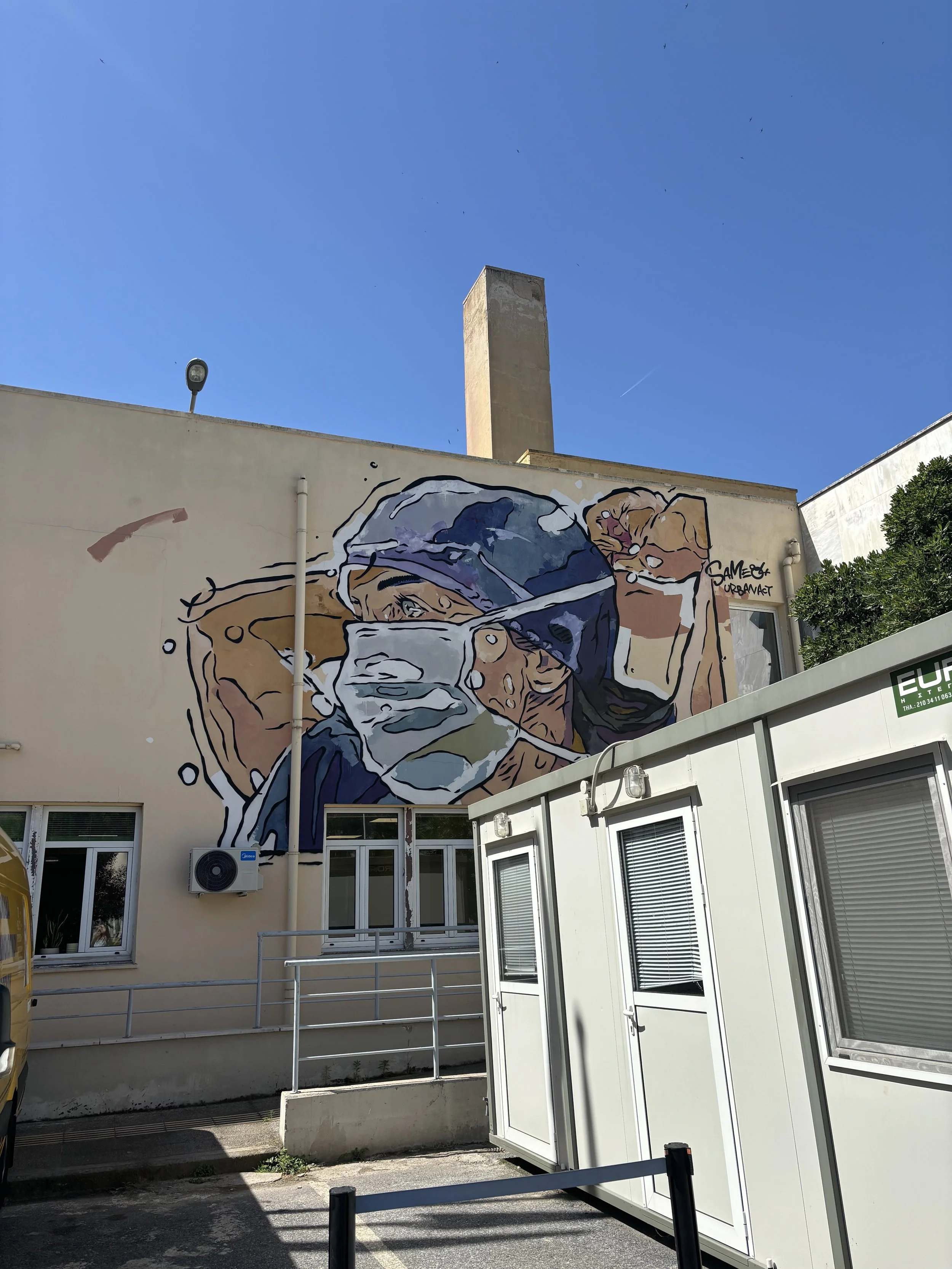
The University of Florida runs a six-credit study abroad summer program in Thessaloniki, Greece called Health Narratives & Problem Solving for Medical Non-Governmental Organizations. Participating in this program helped me strengthen four important skills: open-mindedness throughout projects, understanding patients within the framework of their community, teamwork in an intercultural setting, and adaptability in unfamiliar environments.
Critical Thinking - A key aspect of the course titled Innovation in Healthcare class I took there was utilizing the Design Thinking Process, a multistep approach that promotes open-mindedness in creating innovative solutions to problems. Utilizing this problem solving process has impacted how I problem solve since I began using it. For our project, my small group of four students was tasked with developing ideas for Médecins du Monde (Doctors of the World, MDM), an outpatient medical clinic. We took several weeks to assess the clinic’s staff and patients in an effort to uncover opportunities for improvement. Our group members generated many ideas to improve patient care and ultimately developed a virtual (accessed via QR code) multilingual pamphlets to improve patient-provider communication. Because the Design Thinking Process promotes changing the solution throughout, I did not feel restricted to just my initial idea and along the way, my group and I changed our solution so that we could create the most effective product possible.
Global & Cultural Engagement - When shadowing healthcare professionals at MDM I noted that effective patient care combines both medical knowledge and an understanding of the patient’s social history. The clinic we shadowed in Thessaloniki, Greece is different from other areas in Greece because this region contains a high percent of migrants or asylum seekers. Here, I learned how providers adapted their communication strategies to bridge potential language gaps with multiple translators. This experience helped me understand how important social history is for healthcare. Now, I strive to approach patient interactions with sensitivity and curiosity concerning their past so that I can provide the best quality care.
Teamwork - Working with a diverse team of students from different academic backgrounds, strengths, and perspectives was another growth experience. Each member of my group contributed their unique skills. My team strived to communicate clearly so that while navigating our differences, we ensured that everyone’s ideas were heard and valued. When we encountered challenges, such as uncertainty about clinic operations or feedback that led us to changing our project, we relied on collaboration and constructive discussions to move forward. Specifically, our group avoided making assumptions and instead checked for understanding within the group to promote a clear understanding of each other. Through this experience, I gained a stronger ability to communicate effectively, compromise, and appreciate the value of diverse viewpoints in team-based work.
Self-Development - Changing schedules, language barriers, and competing ideas, were factors that led to me needing to remain flexible. One example was when we arrived at the clinic expecting to observe providers but when we arrived, we learned that the staff had a different idea for us - to take a tour of the mobile clinic a few blocks away. My group was open to changing plans and excited to tour the mobile clinic. In fact, it reinforced the benefits of our virtual pamphlet solution! Remaining adaptable and solution-focused in unexpected situations is a skill I will carry forward in my future medical career, where flexibility is essential in dynamic healthcare environments.
Overall, my time studying abroad in Greece shaped me into a more open-minded, culturally aware, and adaptable problem solver. My capacity to work within a team, cultural competency, and flexibility were all enhanced during this project abroad. The United States is composed of people from various cultural backgrounds so the skills I learned in Greece will be applicable to providing high quality care in the United States as well.
Final Reflection
One of the most transformative aspects of the International Scholars Program was my time studying abroad. My study abroad experience in Thessaloniki, Greece continues to have a profound impact on me in many ways. Clinically, I had exposure to Médecins du Monde (Doctors of the World, MDM), a non-governmental organization dedicated to providing medical care to vulnerable populations. Here, my small group and I learned about global healthcare challenges and collaborative problem-solving. Shadowing providers in this clinic allowed me to engage in the design thinking process and develop a meaningful solution for improving patient-provider communication within the clinic. My cultural experiences in Greece also played a crucial role in broadening my perspective on global health issues. During conversations with locals, I learned about barriers faced by refugees and asylum seekers. This environment was new to me and demonstrated a unique intersection of healthcare, politics, and social inequalities. These lessons reinforced the importance of cultural competence in healthcare.
Additionally, my coursework related to health practices allowed me to compare healthcare models between Greece and the United States. I chose to learn about elderly care and compared Greece’s standard practices to America’s. To add a personal view to the research I found online, I interviewed a local Thessaloniki resident and gained appreciation for how culture and policy interact to shape common practices. Talking with a Thessaloniki mother who made health care decisions for her elderly mother taught me about Greek healthcare and communication. This experience gave me a broader, more nuanced view of healthcare and the ways in which public health policies are shaped by a country’s unique social, economic, and political contexts. These experiences sharpened my ability to interpret complex global health issues and communicate effectively across cultures.
My Quest 1 class provided an enriching exploration of how film, world history, and architecture intersect on an international scale. The course dove into architectural features, cinematography, and Indian history, and for our final individual projects, we applied our knowledge to analyze how architecture, history, and cinematography worked together to tell a story. One of the key themes we explored was how architecture influences the lived experiences of communities, shaping identity and opportunity. I was assigned the 1964 film James Bond: From Russia with Love, and watched it to examine the complex relationship between urban landscapes, cultural narratives, and global influence. The interdisciplinary approach my professor used helped my understanding of how architectural and cultural elements are intertwined, teaching me to think critically about how space and design reflect societal values. In From Russia with Love, globalization is depicted through architecture and urbanism. The physical space I chose to focus on, Kapali Carsi (Grand Bazaar in Istanbul) embodied how architectural elements and global materials symbolized the interactions of different economic, political, and cultural forces. This setting highlighted the significance of how urban spaces, infused with layers of history and geography, shape the characters’ experiences and relationships. After working with this film, I felt a greater understanding of how architecture and design can impact storytelling.
Beyond academics, I found that cultural experiences played a strong role in my growth. Speaking with locals, trying new foods, and learning about historical landmarks enriched my experience by providing a connection to Greece's history and traditions. My cultural experience in Greece also influenced how I approach solving problems. I have become more confident in navigating unfamiliar situations and collaborating with individuals from diverse cultural backgrounds. I also remind myself to remain open minded while creating and testing prototypes instead of limiting myself to the first idea I like. This adaptability is crucial in the medical field, where physicians must remain flexible and responsive to the changing needs of their patients.
Reflecting on my time abroad, I recognize that I have grown personally and professionally. I developed a deeper appreciation for cultural diversity and the role it plays in shaping healthcare experiences. Studying abroad solidified my passion for medicine and medical education. I am excited to continue learning and sharing medical information while using the communication skills I have gained. I hope to foster meaningful connections with patients and colleagues alike. Ultimately, my study abroad experience has shaped me into a more culturally competent and globally minded individual, ready to make a positive impact in the medical field.